
Pros and Cons of Video Games for Young Children
Video games have become a common form of entertainment among children, with many parents allowing their children to play video games at a young age. While video games can provide many benefits, such as improving cognitive skills and hand-eye coordination, they can also have negative effects, especially on young children. In this blog post, we'll explore the pros and cons of video games for young children.
Pros:
Cognitive Benefits:
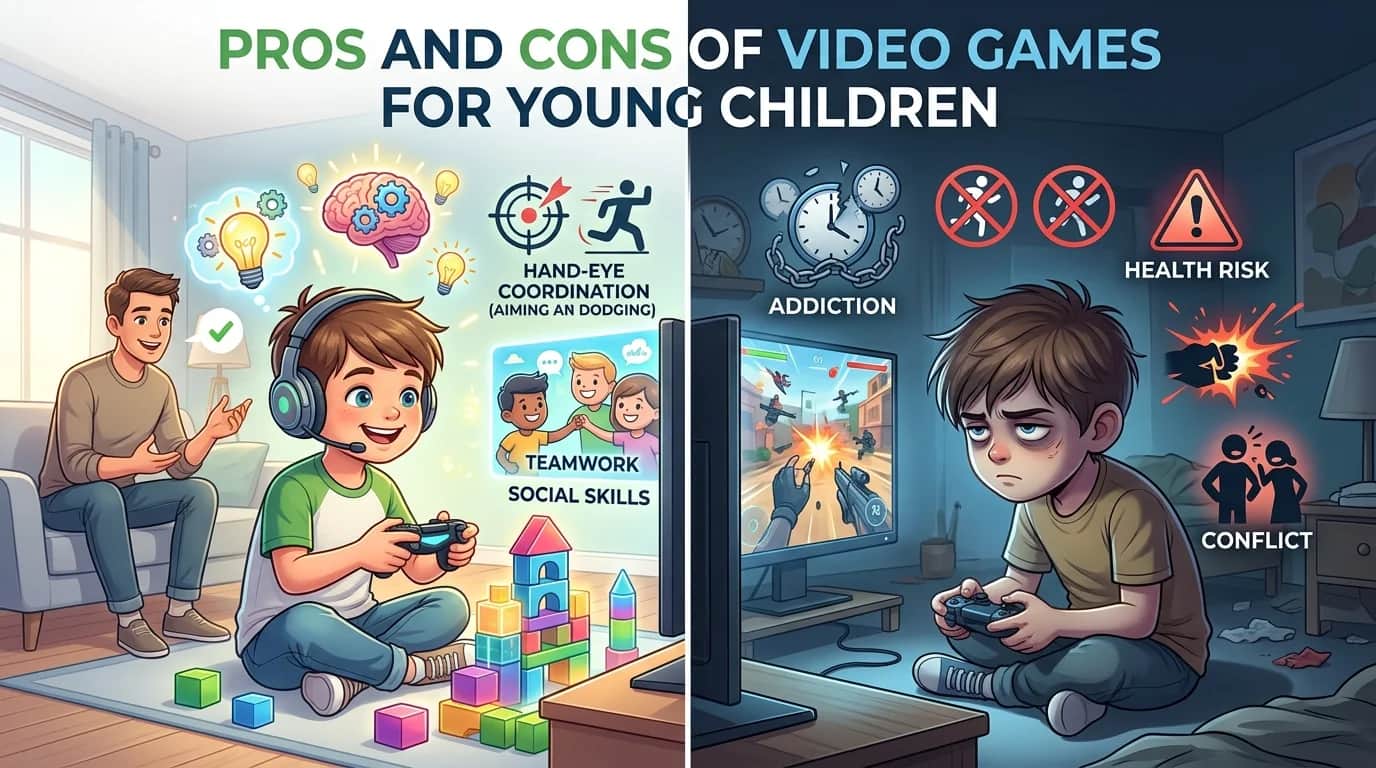
Video games can improve cognitive skills such as attention span, problem-solving, and critical thinking. These skills can be beneficial in both academic and social settings.
Hand-eye Coordination:
Many video games require hand-eye coordination, which can improve a child's dexterity and reflexes.
Social Interaction:
Multiplayer games can provide a platform for social interaction, allowing children to make new friends and develop teamwork skills.
Entertainment:
Video games can provide hours of entertainment for children, which can be a helpful distraction for parents during long car rides or other situations.
Cons:
Addiction:
Video games can be addictive, and young children may struggle to balance their time between playing video games and other activities.
Health Effects:
Spending too much time playing video games can lead to physical health problems such as eye strain, obesity, and poor posture.
Violence:
Some video games can be violent or have aggressive themes, which can desensitize children to violence and lead to aggressive behavior.
Exposure to Inappropriate Content:
Young children may be exposed to inappropriate content such as foul language or sexual themes in video games.
In conclusion, video games can provide many benefits for young children, but parents should also be aware of the potential negative effects. It's important for parents to monitor their children's video game usage and set limits on screen time. By finding a balance between entertainment and other activities, video games can be a fun and educational experience for children.