
The Evolution of Video Games: From Pong to Virtual Reality
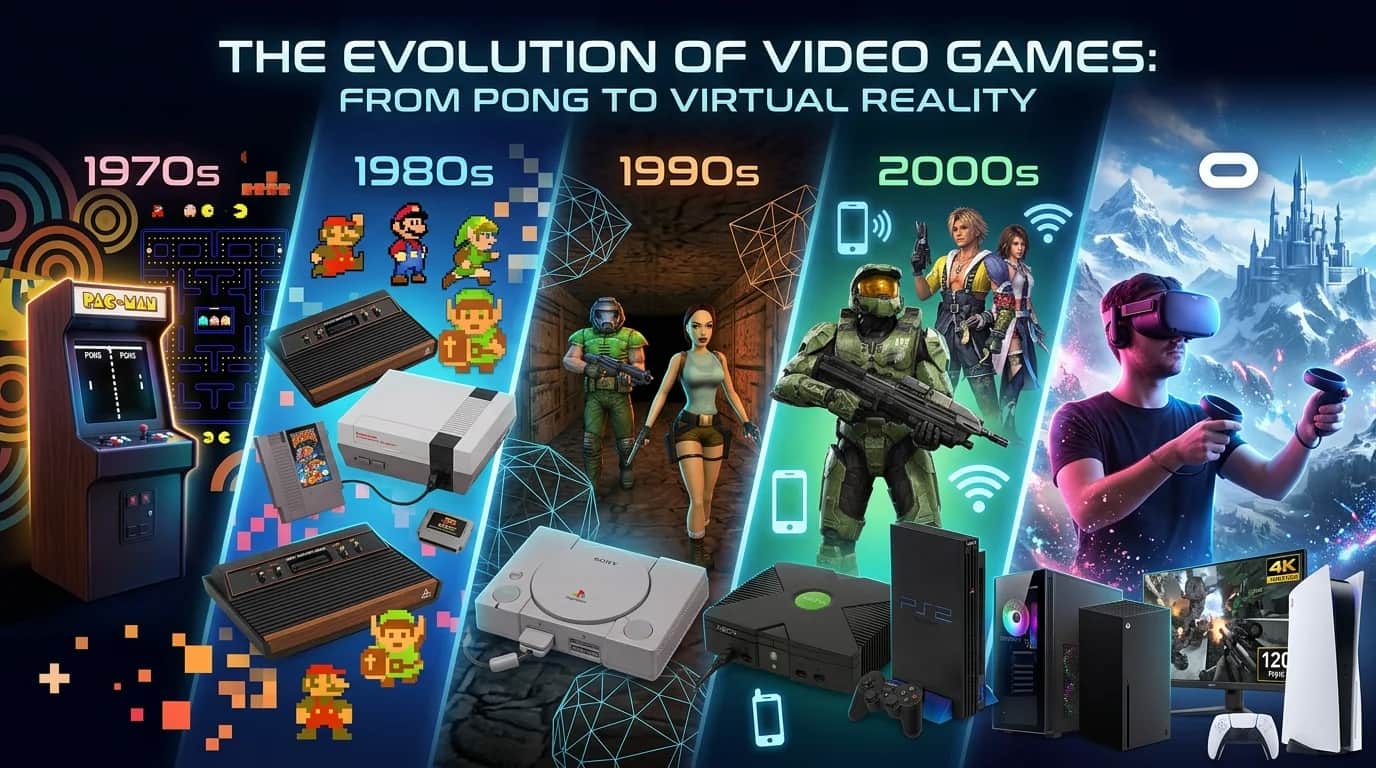
Video games have been around since the 1950s, but they really took off in the 1970s with the release of arcade games like Pong, Space Invaders, and Pac-Man. These games were simple and fun, but they laid the groundwork for the industry that we know today.
In the 1980s, home gaming consoles became popular, and games became more advanced. The Atari 2600, released in 1977, was the first home console to bring arcade-style games to the living room. This was followed by the Nintendo Entertainment System (NES) in 1985, which brought us classic games like Super Mario Bros. and The Legend of Zelda.
The 1990s saw a shift towards 3D graphics, with consoles like the Sega Saturn and the Sony PlayStation bringing us games with more realistic visuals. This was also the era of the first-person shooter, with games like Doom and Quake becoming hugely popular.
The 2000s brought us the Xbox and the PlayStation 2, which took gaming to a whole new level with online multiplayer and high-definition graphics. This was also the era of the mobile game, with smartphones and tablets allowing us to play games on the go.
Today, video games are more popular than ever, and the industry is worth billions of dollars. We have consoles like the Xbox Series X and the PlayStation 5, which can deliver 4K gaming at 120 frames per second. We also have virtual reality headsets like the Oculus Quest 2, which allow us to fully immerse ourselves in virtual worlds.
In conclusion, video games have come a long way since the days of Pong. They have evolved from simple arcade games to complex, immersive experiences that can transport us to other worlds. As technology continues to advance, it will be interesting to see how video games continue to evolve and what new experiences they will offer.